Walnuts, Pumpkin Seeds or Figs? The Simple Guide to Picking the Right Snack for You
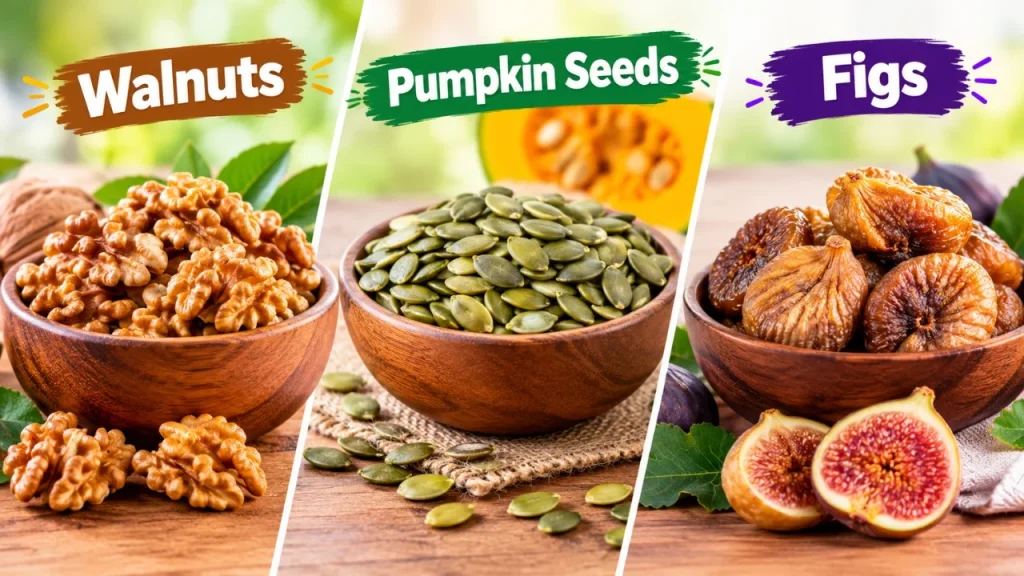
It’s 3 pm. Lunch feels like a long time ago, and dinner is hours away. You open the pantry and there they are: a bag of walnuts, a jar of pepitas, and a packet of dried figs someone bought “to be healthy”.
All three get called superfoods. But they’re not the same at all. One is a nut full of good fats. One is a tiny seed packed with minerals. One is a fruit that tastes like a lolly.
So which one should you grab? Let’s take a look.
Meet the walnut: the heart-friendly one
Walnuts look a bit like a little brain, and they’re famous for one thing. They’re the only common nut with a decent amount of plant omega-3, called ALA. A small handful has about 2.5 g of it.
Research links eating walnuts regularly with better cholesterol levels, which is good news for your heart. The thin, slightly bitter skin also carries antioxidants, so don’t rub it off.
There’s a catch. Walnuts are rich in energy. A small handful, about 7 halves, has around 185 calories. They’re easy to keep munching, so it pays to put a few in a bowl instead of eating from the bag.
Meet the pumpkin seed: the quiet achiever
Pumpkin seeds don’t look like much. But gram for gram, they’re the strongest of the three.
A 28 g serve gives you about 8.5 g of protein, double what you get from walnuts. They’re also one of the best food sources of magnesium. That same small serve covers around 40% of what most adults need in a day. Magnesium helps your muscles, nerves and sleep, and a lot of people don’t get enough.
Pumpkin seeds also bring zinc for your immune system and iron for energy. They’re savoury and crunchy, so they’re easy to sprinkle on salads, soups, yoghurt or porridge.
One tip: check the label. Some packaged pepitas are heavily salted.
Meet the fig: the sweet one
Figs are the odd one out because they’re a fruit. Dried figs are soft, chewy and naturally sweet, which makes them a great swap when you want something sugary.
A 28 g serve, about three small dried figs, has around 70 calories and almost 3 g of fibre. Fibre keeps things moving in your gut, which is why figs have a long reputation as a gentle help for digestion. They also add potassium and a little calcium.
But drying a fruit concentrates its sugar. That small serve has about 13 g of natural sugar. If you’re watching your blood sugar, keep figs to a few at a time and eat them with a handful of nuts or seeds to slow things down.
Side by side
| Per 28 g serve | Walnuts | Pumpkin seeds | Dried figs |
|---|---|---|---|
| Calories | 185 | 157 | 70 |
| Protein | 4.3 g | 8.5 g | 0.9 g |
| Fat | 18.5 g | 13.7 g | 0.3 g |
| Carbohydrate | 3.9 g | 3 g | 17.9 g |
| Sugar | 0.7 g | 0.4 g | 13.4 g |
| Fibre | 1.9 g | 1.7 g | 2.7 g |
| Magnesium | 44 mg | 166 mg | 19 mg |
| Stand-out | Omega-3 (ALA) | Protein, magnesium, zinc | Fibre, potassium |
So, which one wins?
Honestly, it depends on what you need.
- Want to look after your heart? Go for walnuts.
- Need more protein or magnesium? Pumpkin seeds are your pick.
- Craving something sweet? Reach for figs instead of biscuits.
- Trying to manage your weight? All three can fit. It’s the portion that matters, not the food.
The best answer is that you don’t have to choose. Try a couple of figs with breakfast, a few walnuts at 3 pm, and a spoonful of pumpkin seeds on your dinner salad. Mixing them up gives your body a bit of everything.
Quick questions
Can I eat all three every day?
Yes, for most healthy people. Keep each portion small: a handful of walnuts, a tablespoon or two of pumpkin seeds, and two or three figs.
Fresh figs or dried?
Fresh figs have more water, so they’re lighter in sugar and calories per bite. Dried figs are handier to keep in the pantry. Both are good choices.
Should I soak walnuts or figs?
Soaking makes them softer and easier to chew. There’s no strong evidence it changes their nutrition much, so do whatever you enjoy.
If you have a nut or seed allergy, diabetes or kidney problems, check with your GP or an accredited practising dietitian before making big changes to your diet.