Aaron Hernandez Death What Happened to the Former New England Patriots Star.
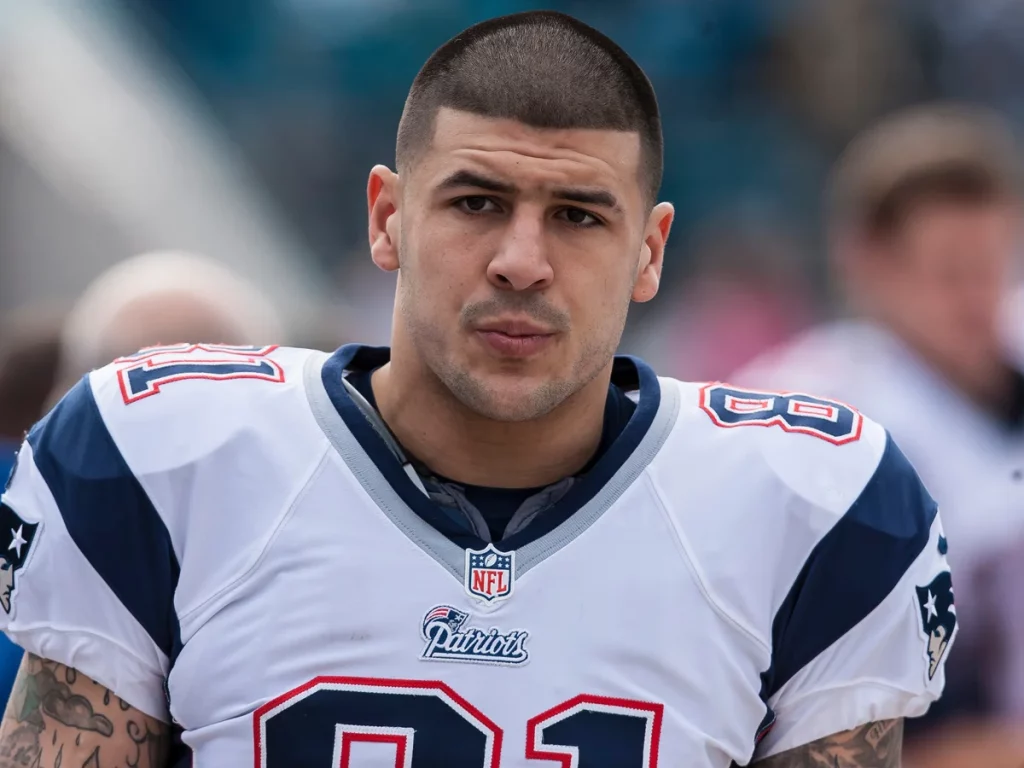
Aaron Hernandez death remains one of the most discussed tragedies in modern NFL history. The former New England Patriots tight end died on April 19, 2017, at the age of 27 while incarcerated at the Souza Baranowski Correctional Center in Shirley, Massachusetts. Correction officers found Hernandez unresponsive shortly after 3 a.m., and he was later pronounced dead at a nearby hospital.
Massachusetts authorities officially ruled his death a suicide. The medical examiner determined that Hernandez died from asphyxia by hanging. Investigators also reported finding three handwritten notes beside an open Bible in his cell. Authorities said there was no evidence that another person was involved.
Aaron Hernandez Was Serving a Life Sentence When He Died
At the time of his death, Hernandez was serving a life sentence without the possibility of parole for the 2013 murder of Odin Lloyd. Lloyd, a semi professional football player, had been dating the sister of Hernandez’s fiancée. Hernandez was convicted of first degree murder in 2015 and sent to a maximum security prison in Massachusetts.
His death happened only five days after a separate criminal trial ended in his favor. On April 14, 2017, a Boston jury acquitted Hernandez of murder charges connected to the 2012 deaths of Daniel de Abreu and Safiro Furtado. The timing of his death shortly after that verdict generated intense public interest and questions about his state of mind.
Hernandez also left messages for people close to him. Court officials later released part of a note written to his fiancée, Shayanna Jenkins Hernandez. Because the notes were deeply personal, they became part of the wider discussion surrounding his death, but they did not provide a simple explanation for why he took his own life.
Before his legal troubles, Hernandez had been one of the NFL’s most promising young tight ends. The Patriots selected him in the fourth round of the 2010 NFL Draft, and he quickly became an important part of New England’s offense. His football career ended abruptly after his arrest in connection with Lloyd’s death in 2013.
Aaron Hernandez Was Diagnosed With Severe CTE After His Death
Following Hernandez’s death, his family donated his brain to researchers at Boston University. Dr. Ann McKee and the university’s CTE Center examined it and concluded that Hernandez had Stage 3 chronic traumatic encephalopathy, commonly known as CTE. The disease has four stages, making his diagnosis particularly advanced for someone who was only 27.
Boston University researchers later said the level of damage was among the most severe they had observed in such a young person. Dr. McKee reported significant changes in areas of Hernandez’s brain involved in judgment, cognition and decision making. His case became important to ongoing research examining repeated head trauma among football players.
CTE has been associated with symptoms including problems with memory, mood and behavior, but researchers have not established that Hernandez’s brain condition alone caused his crimes or his death. His medical findings provide important context, but they cannot offer a complete explanation for the complicated events surrounding his life.
Years later, Aaron Hernandez death continues to draw attention because his story combined NFL success, criminal convictions, personal tragedy and major questions about brain injuries in contact sports. His death at 27 ended a life that had once appeared headed toward football stardom while leaving behind a complex legacy that continues to be examined in sports, medicine and popular culture.